Notes on Paying Attention
Anything in life can be richer and sweeter if you slow down and pay attention, but some things reward attention more than others.
The different amount of rewardingness per attention is socially constructed and thus arbitrary to some degree. But it's genuinely nice, to have others who have also paid attention to the thing tell you about the interesting parts that you might have missed, and this can enrich your own experience.
But relying on others to tell you what to pay attention to, and how, is also a bit of a trap. Because each person's umwelt is slightly different from the next, your preferences might legitimately differ from the horde. And only after articulating/distinguishing/understanding your own preferences can you go out into the world and find the other things that will delight you. C.S. Lewis puts it well, in The Problem of Pain:1
You may have noticed that the books you really love are bound together by a secret thread. You know very well what is the common quality that makes you love them, though you cannot put it into words: but most of your friends do not see it at all, and often wonder why, liking this, you should also like that. Again, you have stood before some landscape, which seems to embody what you have been looking for all your life; and then turned to the friend at your side who appears to be seeing what you saw—but at the first words a gulf yawns between you, and you realise that this landscape means something totally different to him, that he is pursuing an alien vision and cares nothing for the ineffable suggestion by which you are transported. Even in your hobbies, has there not always been some secret attraction which the others are curiously ignorant of—something, not to be identified with, but always on the verge of breaking through, the smell of cut wood in the workshop or the clap-clap of water against the boat’s side?
He's right that there's something a little ineffable about it, that secret thread. But you can get to know it better, if you sat with the feeling.
One reason people don't do this is because while paying attention can be rewarding, it could also be risky. After all, what if you are not enjoying something the right way? As Montaigne puts it:
When you have just listened to a whole page of Virgil you can safely exclaim, ‘Now that is beautiful!’ The cunning ones escape that way. But to undertake to go back over the detail of a good author, to try to indicate with precise and selected examples where he surpasses himself and where he flies high by weighing his words and his locutions and his choice of materials one after another: not many try that. [On the art of conversation]
But the ones who want to escape are cowards who are shooting themselves in the foot! You shouldn't be trying to impress other people with your attention. You should be enjoying it for yourself, because paying attention (especially to things you like) is pleasurable. And so you should try to be precise, to give selected examples, and to unapologetically embrace your preferences even when they are embarrassing. And then you should seek out more things that are similar to what you like, to pay closer attention to.
A wonderfully instructive model of paying close attention can be found in Peter Schjeldahl's Hot, Cold, Heavy, Light, a collection of a hundred of his art reviews (he was the New Yorker's art critic from 2002-2022).2 On a Vermeer, for example:
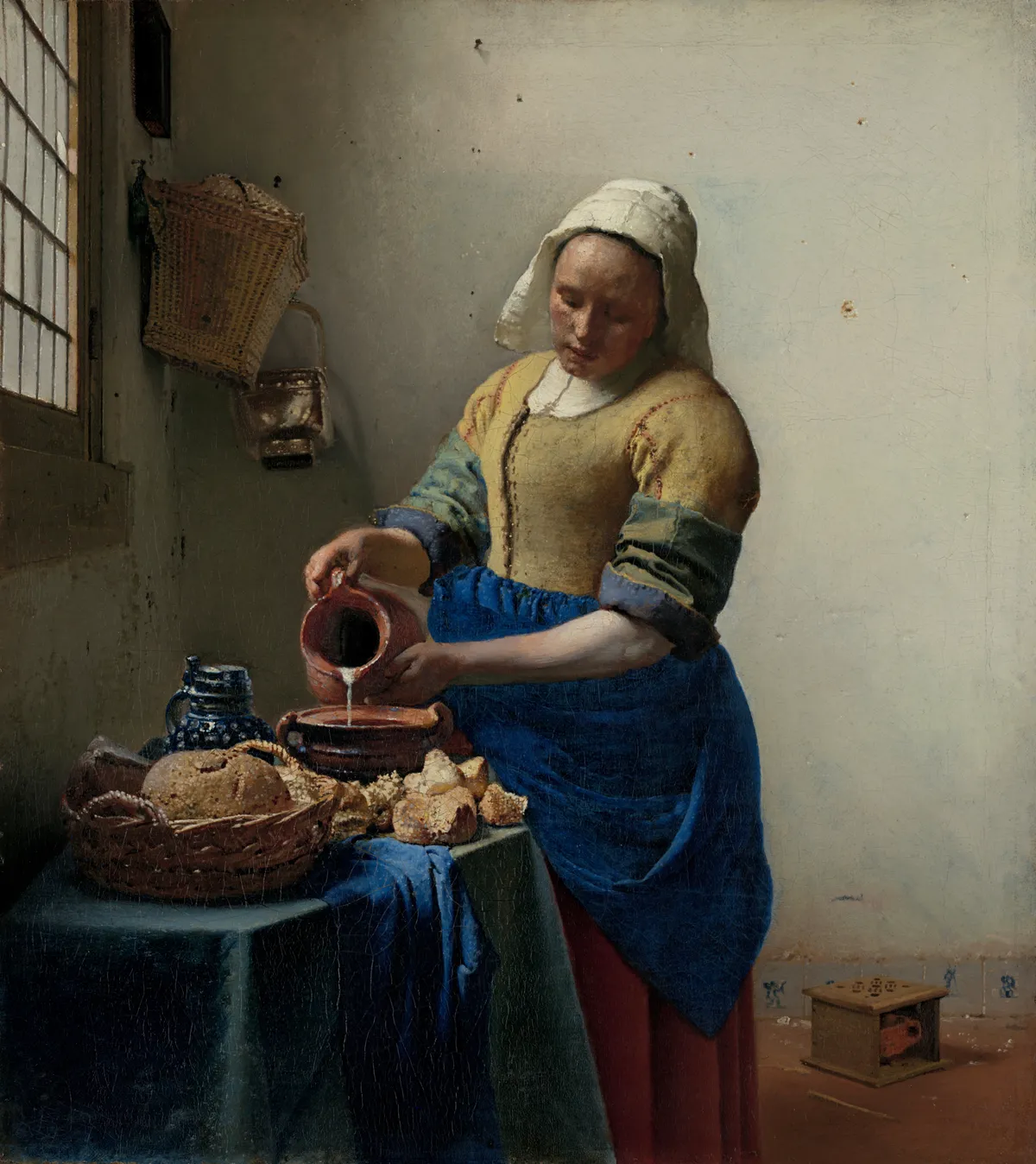
“The Milkmaid”—a diminutive picture, just eighteen inches high by about sixteen wide—is another of the elect, though it’s a mite less absorbing, for me, than the more mature “Young Woman with a Water Pitcher.” Like “Delft,” “The Milkmaid” exercises more dazzling virtuosity than I quite know what to do with. Sensational colors, in particular, strain the scene of a husky young servant pouring milk, in a careful dribble, from an earthenware pitcher into an earthenware bowl on an odd-shaped table laden with a wicker basket, a loaf and fragments of crusty bread, and a stoneware beer jug. (She may be making bread pudding.) She wears a white linen cap, a yellow woollen jacket with green work sleeves, a red skirt, and an apron of a stunningly sumptuous blue.3 The hues jump out from the painting’s miraculous rendering of soft sunlight from a bleared window with a small broken pane that reveals the full brightness of the day. The light spills in a static wave of modulated tones across the dilapidated walls of an apparently rather dank room; the odd stain or nail hole in a wall can grab your eye and not immediately let it go. A boxy foot warmer on the floor calls attention to small baseboard ceramic tiles, one of which, with a blue cartoon of Cupid, may drop a certain hint.
You can notice the same things as Schjeldahl, if you stand in front of The Milkmaid, and stay there for five minutes. He's not exactly making observations that require an art history degree to make!
Closer to home, I'm reminded of Original Seeing from the sequences, and Logan Strohl's naturalism sequence (which aims to communicate what he means by the sentence “knowing the territory takes patient and direct observation"). I think Robert Miles is on a similar wavelength when he divulges his trick for turning foods he dislikes into food he enjoys, and Sasha Chapin when he explains how to like everything more. Probably there are more takes along these lines in woo and meditation communities, but I am allergic to those and have no notes on the matter.
In 2022, I saw Guo Pei's retrospective at the Legion of Honor, which had like eighty of her pieces. Guo Pei is my favourite couture designer — I'm not sure how universal this experience is, but I remember being really excited when I learned about the existence of couture fashion, and then very disappointed when I realized what most collections were like in practice. But Guo Pei, uniquely and delightfully, just keeps delivering on the fantastical experience that I thought couture fashion was at seven years old.
The entire gallery took me thirty minutes or so to finish completely, the first time around. This was a once in a lifetime opportunity (I was in the Bay only for a short time), and I felt disappointed by how little I got out of it. My gaze rested on the intricate dresses, but failed to penetrate, and I knew they would not remain in my memory.
It struck me somehow that more was possible, if only I would pay more attention.
So I decided to do the round again, but this time I was going to play a game with myself. I was going to look at every single one of the intricate outfits on display until each gave me a new idea of how I can dress differently myself. Only then will I move on to the next one. This was an interesting challenge, because in no way can you wear any of Guo Pei's masterpieces on a day to day basis.
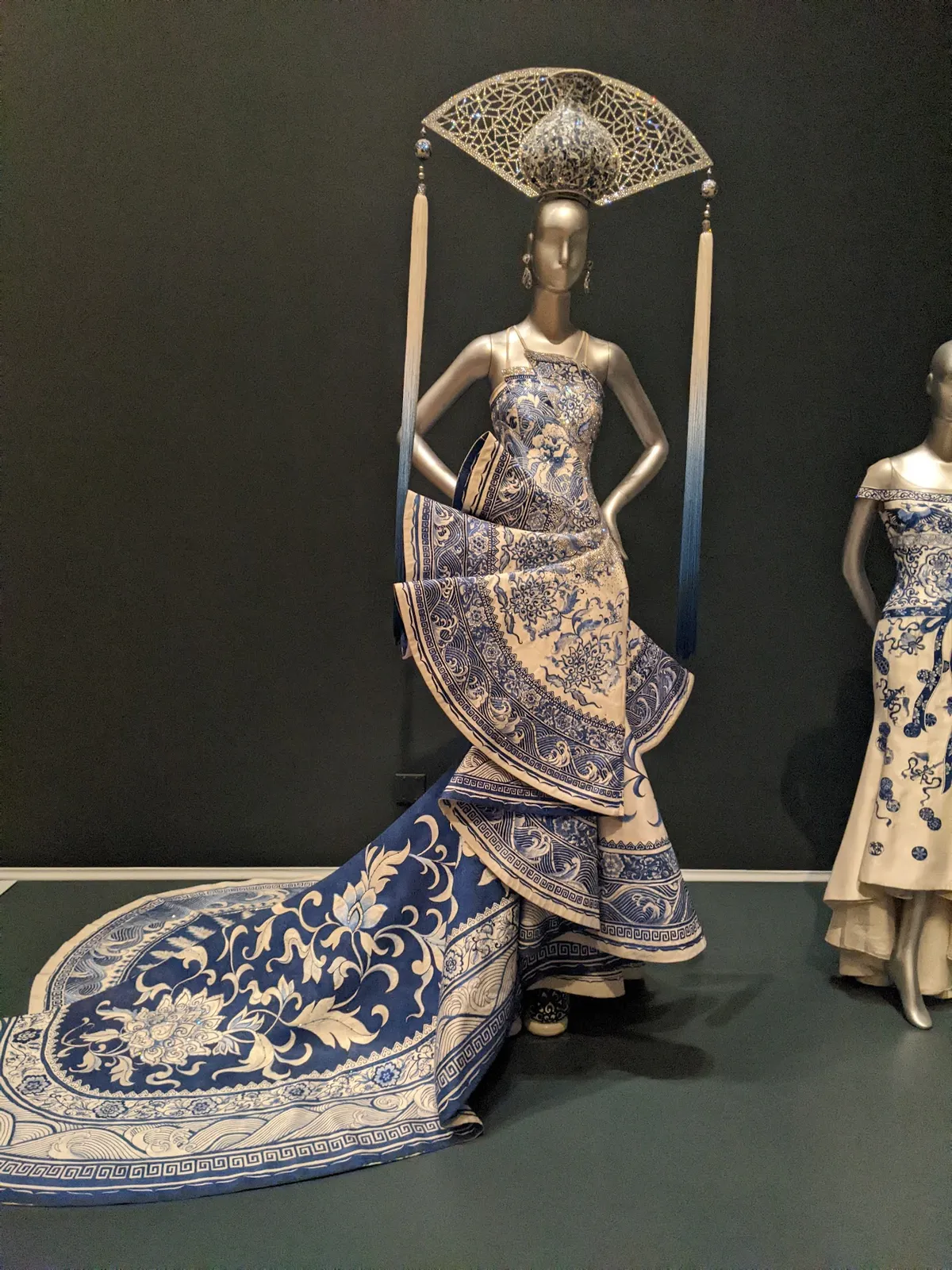
my note for this one: try a two-tone outfit but with a gradient element, not just colourblocking.
The acts of seeking and translation slowed me down.
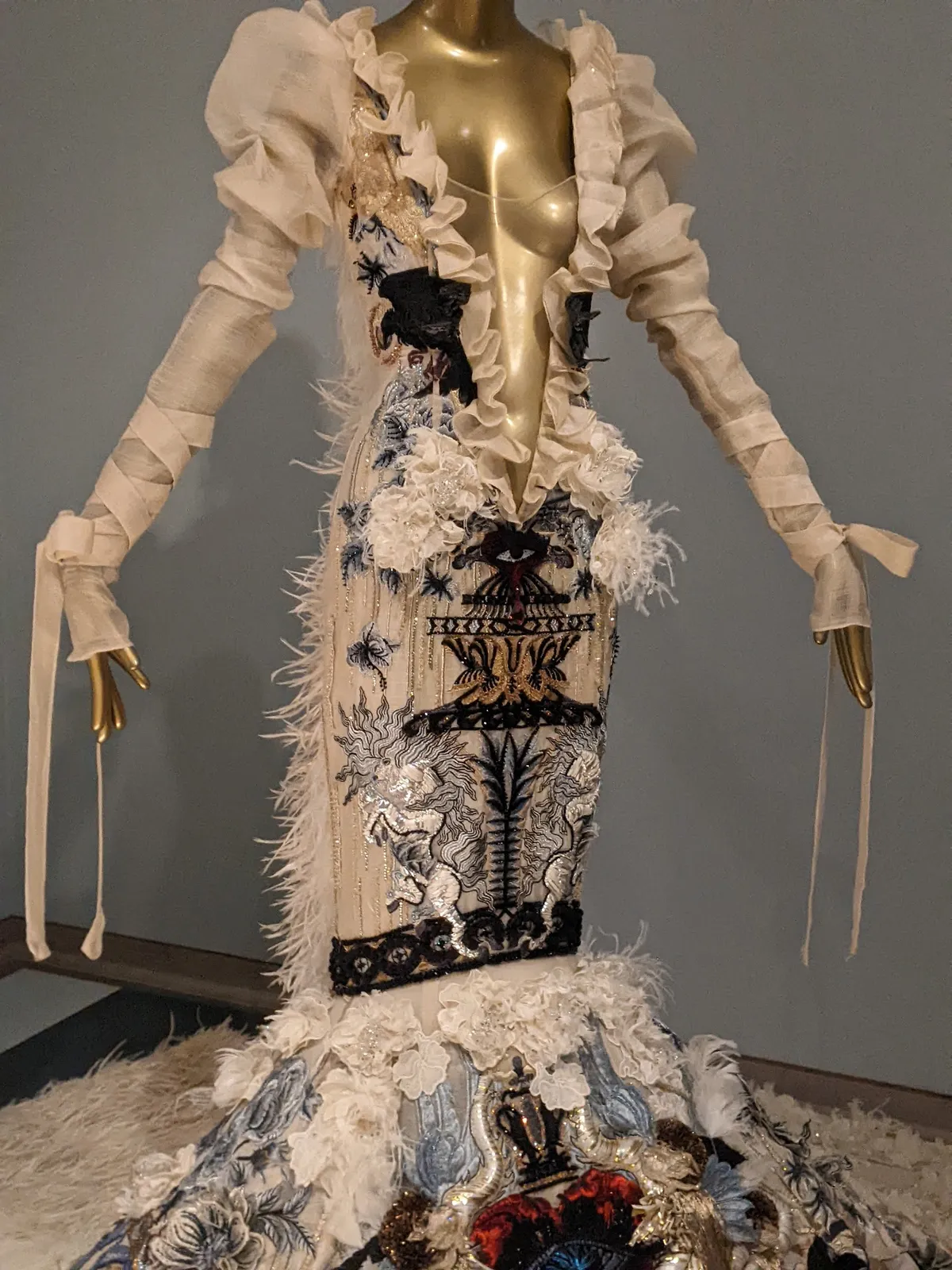
my note for this one: thick ribbons twisted over translucent sleeves of the same colour.
It slowed me down enough, to pay attention.
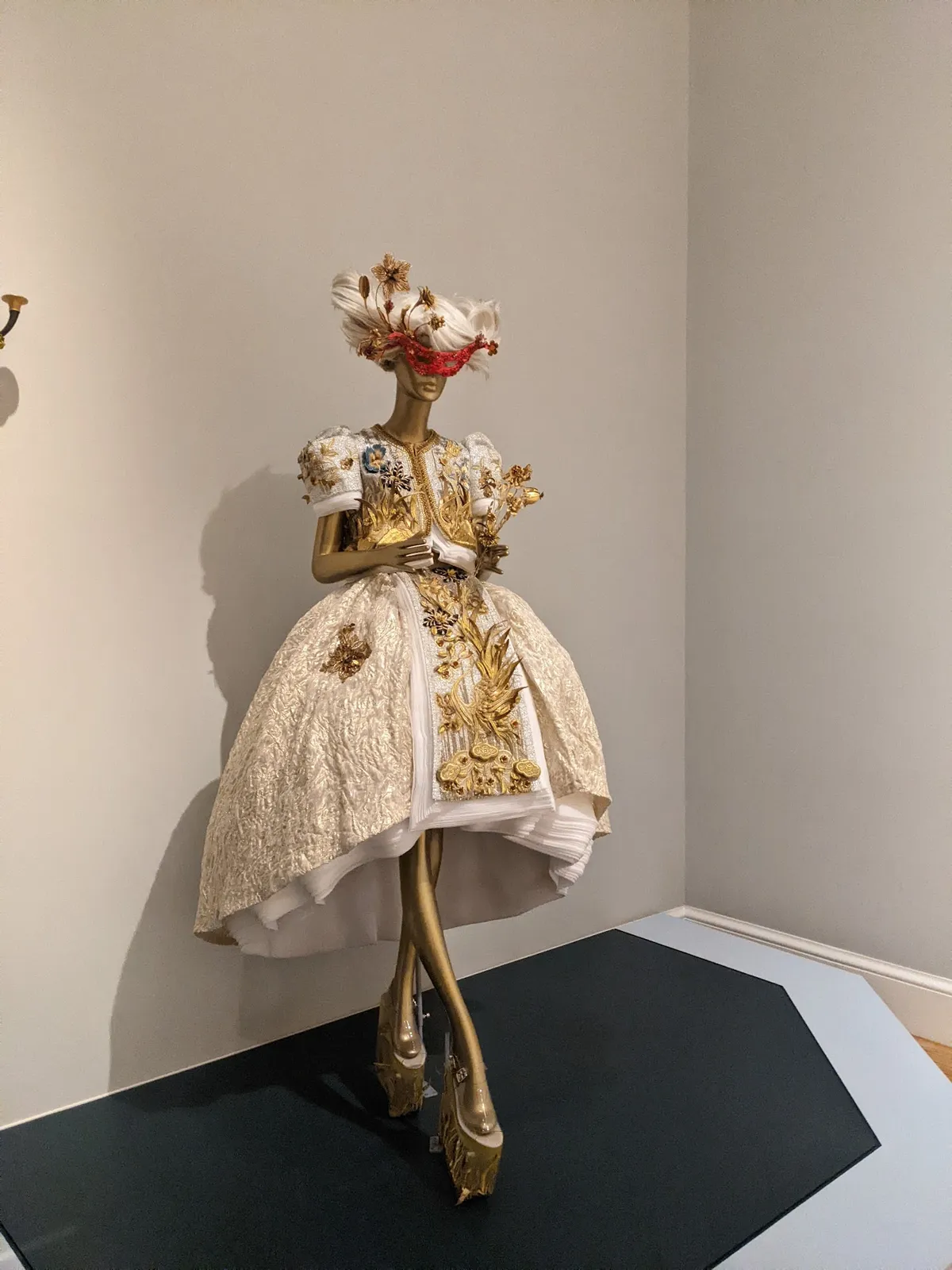
my note for this one: most of your outfits with vests are dark. experiment with a lighter vest.
I picked up many details that I didn't the first time.
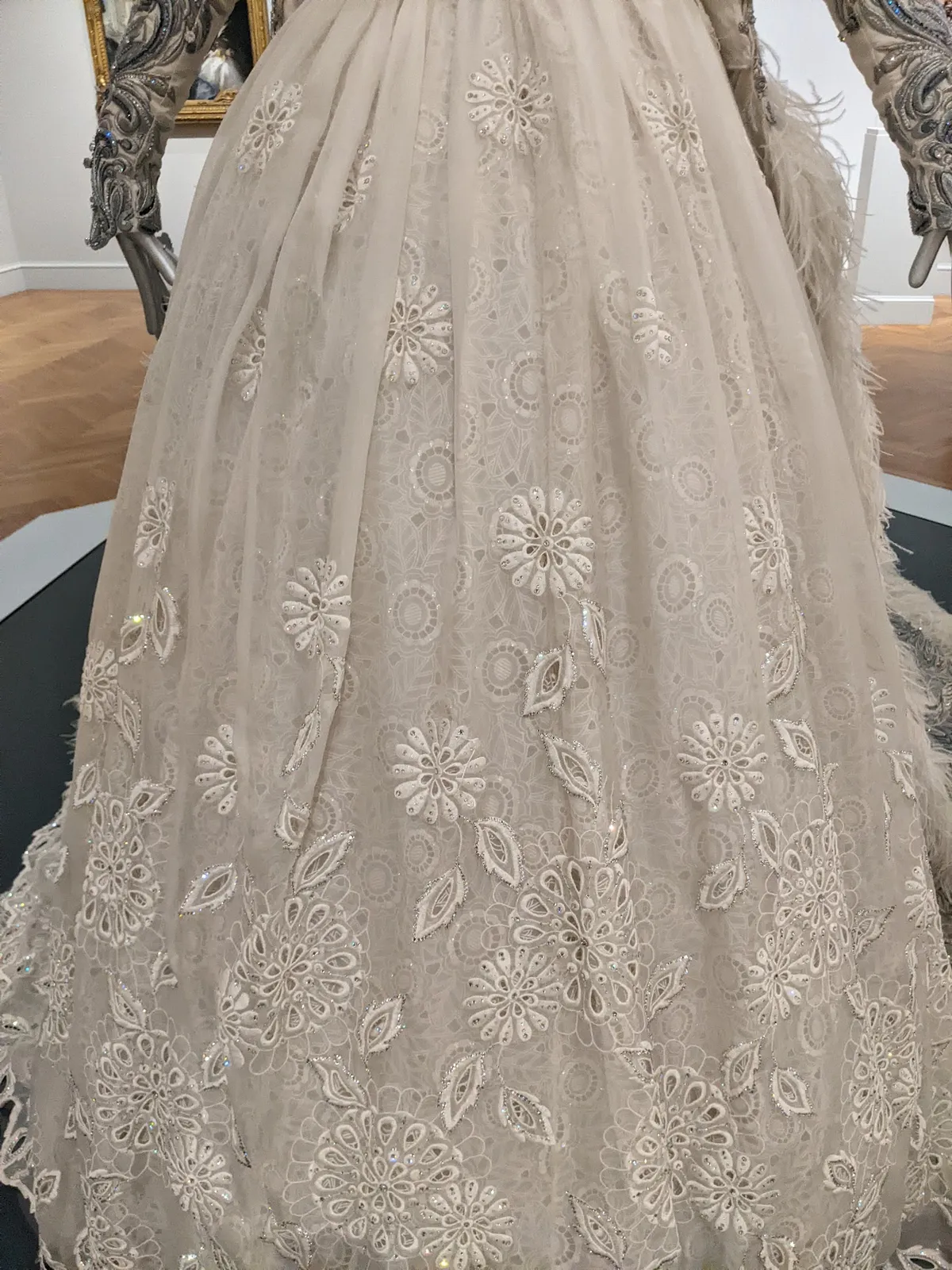
my note for this one: two layers is sufficient to create an illusion of many.
The second go-around took long enough that I didn't leave the exhibit until the museum's closing time.
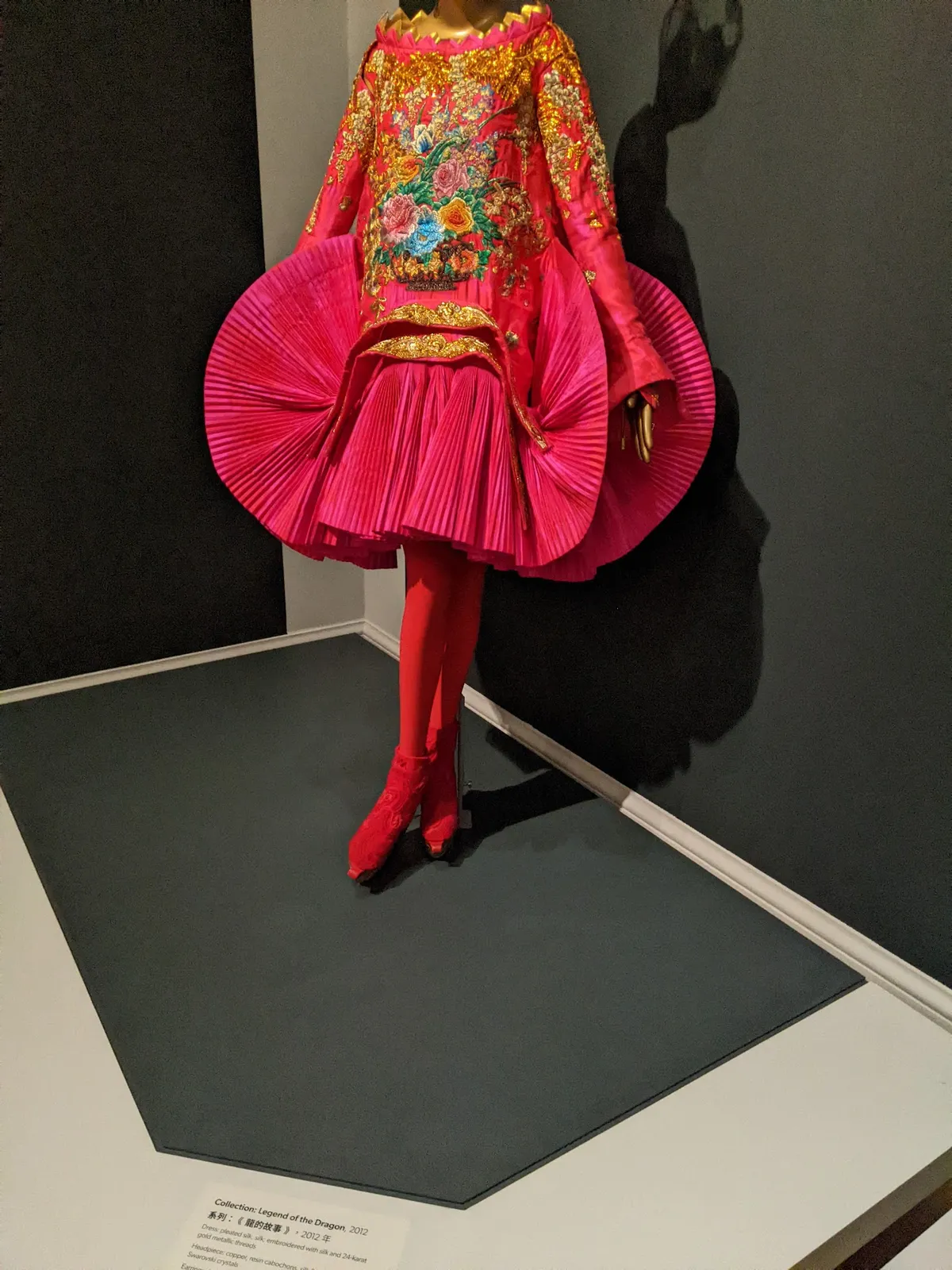
my note for this one: try short bottoms paired with tights and shoes of the same non-black colour.
That experience is the one that taught me to pay attention. What I didn't expect was the joy that I felt, when I slowed down to do it.
Since then, I have tried to pay more attention.
Sadly, this is from a book where he then goes on to proclaim that the reason that you feel this way is because the thing you really yearn for is to go to heaven, a real location.↩
Total tangent: I did not agree the New Yorker is midwit until I read Schjeldahl's collection, and now I kind of think it is. Yes, I think his reviews are a good model of the experience of paying attention to a piece of art, and I would absolutely recommend it to people who are interested in cultivating their own artistic taste. Reading his reviews, you feel permission to look at art for yourself, to not worry about if you're doing it wrong as long as you are actually paying attention - and that is a tremendous gift. So why do I say that it's sort of midwit? Er, deductive reasoning, mostly. I get the overwhelming sense, reading it, that Schjeldahl is performing a level of seeing and understanding that I am now perfectly capable of doing myself. And I know that my own taste in art is unsophisticated!↩
IYKYK :)↩